How it works
Three steps, and the middle one is just playing padel.
-
Before
Start a match on the Watch
Open Smash on your Watch, on the wrist you hold the racket with, and tap Start Match. Your phone can stay in your bag.
-
During
Play
The Watch reads its motion sensors fifty times a second. When your wrist swings hard enough it captures the swing, works out which shot it was, and shows its speed on your wrist.
-
After
Read the match
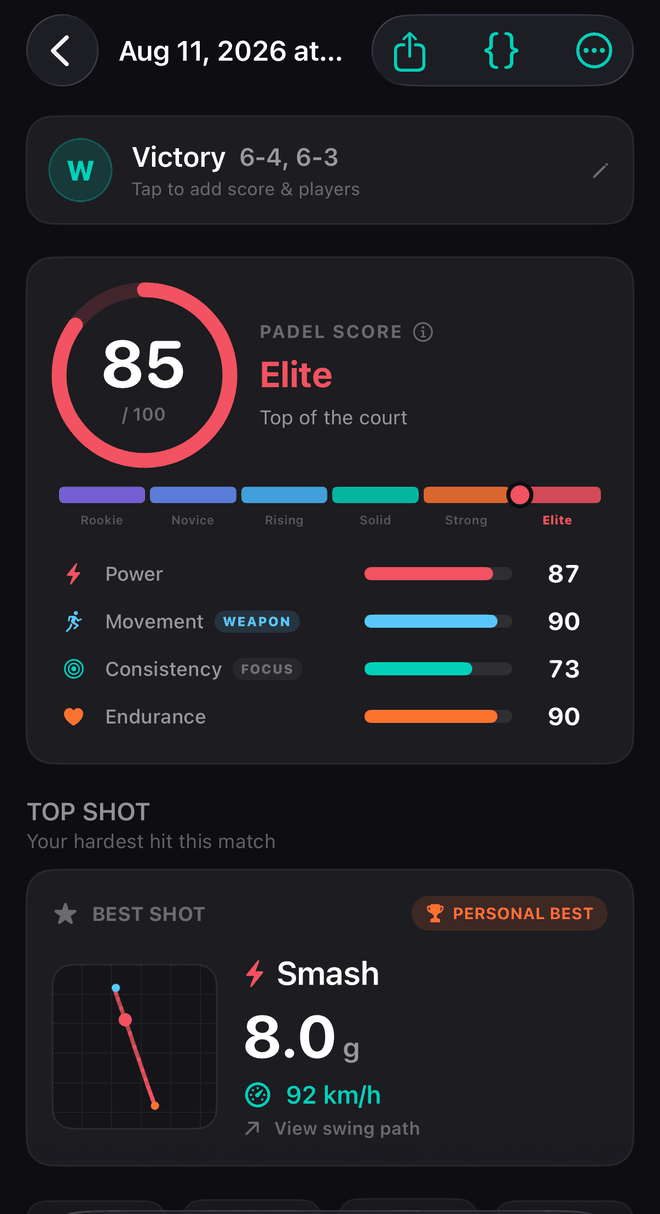
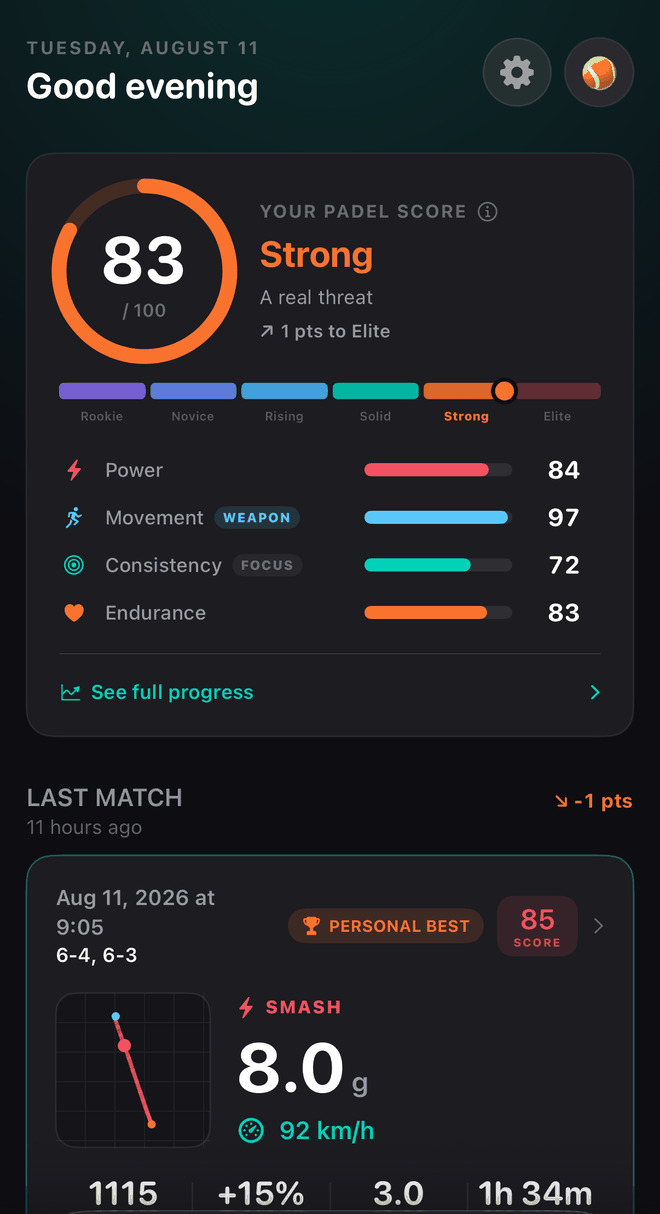
End the match and it moves to your iPhone: every shot, your movement around the court, your heart rate, and a Padel Score for the day.
What it records
Smash was built for padel from the start, so it names the shots padel players actually talk about.
Named as you play
Forehand, backhand, volley, lob, serve, bandeja and smash. If one is labelled wrong, tap it in the match and correct it.
How hard you hit it
The peak of each swing in g, and an estimated speed in km/h. Your hardest shot of the match, and your records over time.
The path of the swing
Open any shot to see the path your wrist took through it, with the moment of contact marked.
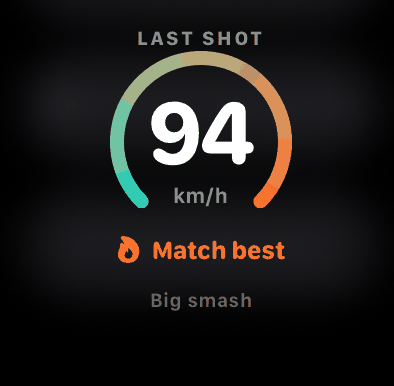
A glance between points
The Watch shows the shot you just hit, with its estimated speed and whether it beat anything you’ve hit this match. Then you put your arm down and play the next point.
How it knows what you hit
Smash has no camera and never sees the ball. Everything comes from how your wrist moves.
A swing starts when your wrist passes 1.7 g, and it counts as a shot when it peaks above 2.6 g. If your forearm is tilted more than 49° from level as you meet the ball, it was an overhead: a smash above 5.5 g, a bandeja below. Forehand and backhand are told apart by which way your forearm twists through the swing.
These are rules a person can read, and we publish them.
Your Padel Score
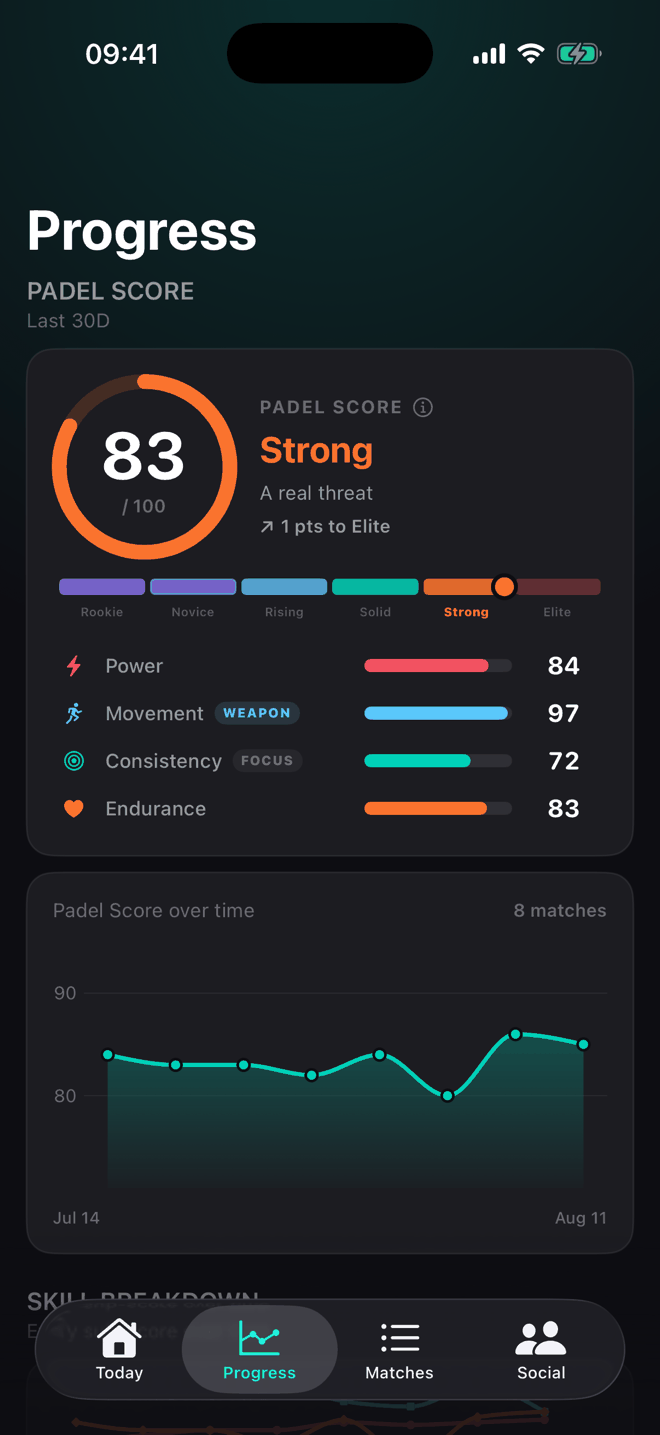
One number out of 100 for each match, made from what you did on court. It isn’t a ranking and it doesn’t know who won.
- Power 30%
- Your hardest shot and your average one.
- Consistency 25%
- How even your shots are, and how long your rallies last.
- Endurance 25%
- Time on court, heart rate and the number of shots.
- Movement 20%
- Distance covered each minute, and how much of the court you used.
Each part is measured against what a good club player manages, such as a hardest shot of 7.5 g or six shots in a rally. Six tiers run from Rookie to Elite, and the app shows which of the four is carrying your game and which is holding it back.
Movement and heart rate
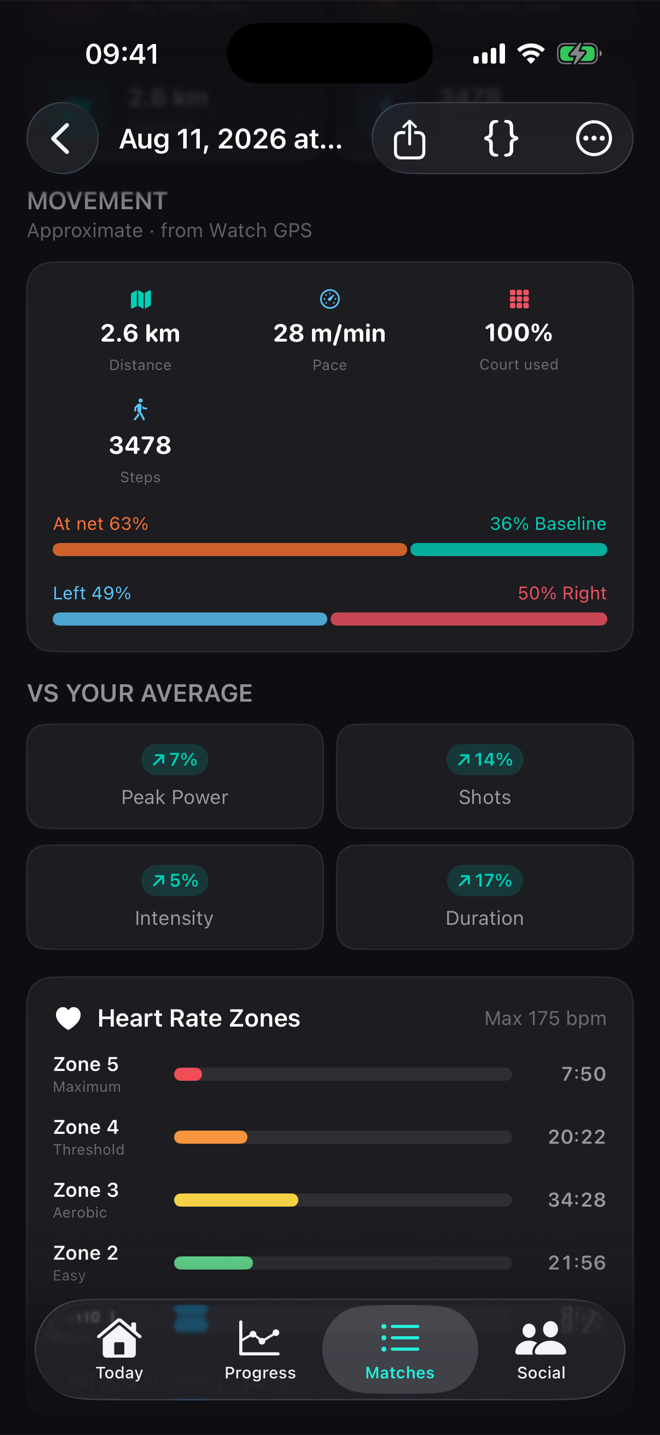
Every match is also a workout, and Smash records it as one.
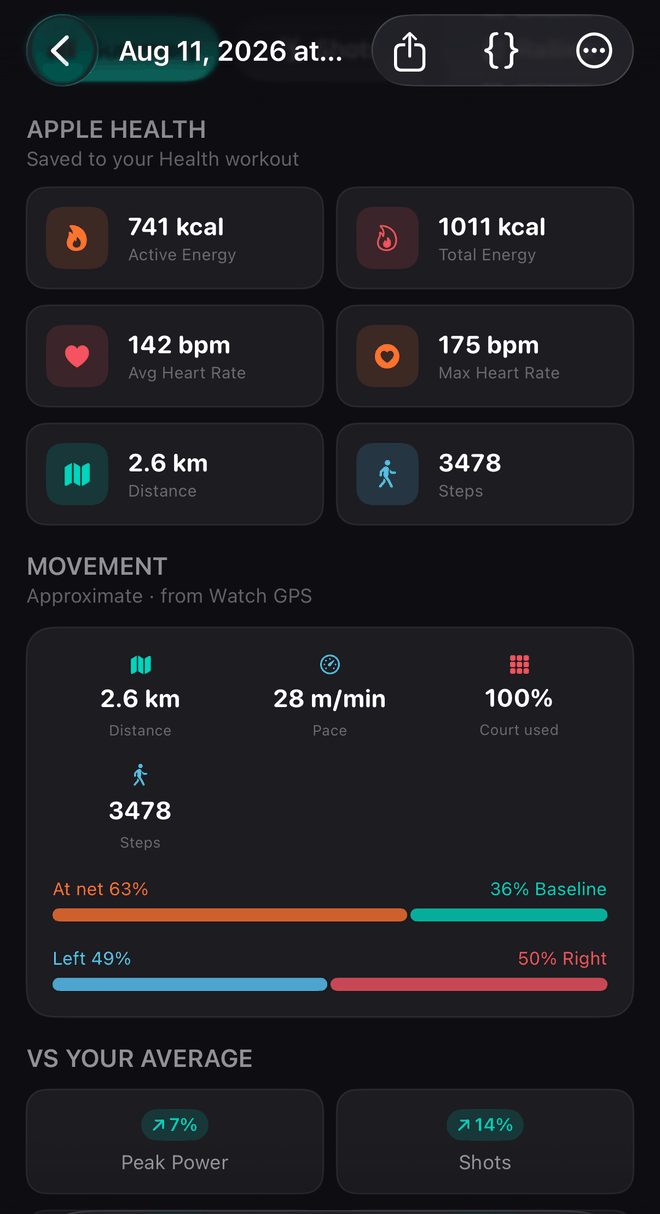
- Distance, pace and steps, and how much of the court you used
- Time at the net against time at the back, and left against right
- Heart rate through the match, with minutes in each zone
- Active calories, saved to Apple Health as a workout
- Each match compared with your own average
Movement comes from the Watch’s GPS. On a court ten metres wide that is approximate, and the app labels it that way.
Yours, and private by default
Your matches follow you
You sign in with Apple, and every match is saved to your account. Change phones or reinstall the app and your whole history is still there.
The people you play with
Follow other players, share matches, compare head to head, and climb a weekly leaderboard. New matches are visible to your followers only unless you choose otherwise, and any match can be made private.
No signal on court
The Watch records without a connection. The match moves to your iPhone when the two are next together, and to your account once the phone is online.
What it doesn’t do
A watch on one wrist is a narrow view of a match. These are the limits.
- It doesn’t keep score. You mark a match as won or lost afterwards.
- It never sees the ball. It can’t tell whether a shot went in, or who won the point.
- The speed is an estimate from your wrist, not a measurement of the ball.
- Shot names come from rules, and rules are sometimes wrong. You can correct any shot.
- It needs an Apple Watch. There is no Android version, and the app is in English only.
What it costs
Smash is free to download, and right now every feature is free, including the shot-by-shot detail.
Later, the deeper analysis will move to a paid Pro tier, billed through Apple. Recording matches, your Padel Score and your match history will stay free, with no limit on how many matches you can record or keep.
Questions
Which Apple Watch do I need?
Any Apple Watch that runs watchOS 26 or later, paired with an iPhone on iOS 18.6 or later. Matches are recorded on the Watch; the iPhone app is where you read them.
Which wrist do I wear it on?
The one you hold your racket with. Smash measures the swing of that arm, so on the other wrist it would see very little. Left-handed players choose their racket hand when they set the app up, and can change it on the Watch.
Do I need my phone on court?
No. The Watch records the whole match on its own, with no signal needed. The match moves to your iPhone the next time the two are together, and is saved to your account when the phone is online.
Does it keep score?
No. Smash tracks your shots, your movement and your heart rate. It doesn’t know who won a point. After the match you can mark it as won or lost.
How does it tell a bandeja from a smash?
Both are overheads: swings where the forearm is tilted more than 49° from level as it meets the ball. Smash calls the overhead a smash when the swing peaks above 5.5 g, and a bandeja below that. The full list of rules is on the page How our padel tracker works.
How accurate is the shot detection?
We haven’t published an accuracy figure, because we haven’t yet measured one we would stand behind. The rules were set from drills in which every shot was known. When a shot is labelled wrong you can tap it in the match and correct it.
Is the speed it shows the speed of the ball?
No. The Watch can’t see the ball or the racket. The speed is an estimate made from how hard your wrist accelerated, and it is most useful for comparing your own shots with each other.
Is Smash free?
Yes. It is free to download, and right now every feature is free. Later, the deeper analysis will move to a paid Pro tier. Recording matches, your Padel Score and your match history will stay free, with no limit on the number of matches.
Do I need an account?
Yes. You sign in with Apple when you set the app up. Every match is saved to your account, so your history is still there on a new phone or after reinstalling. New matches are visible to your followers only unless you choose otherwise, and any match can be made private.
What happens to my matches if I change phones?
Nothing is lost. Sign in with the same Apple ID on the new phone and your matches download from your account, with their shots, swing paths and court map.
Does a match count as a workout?
Yes. Each match is saved to Apple Health as a workout, with heart rate, active calories and distance, so it counts towards your Activity rings.
Does it work for tennis or pickleball?
It is built for padel. The shots it names are padel’s, including the bandeja, and its rules were tuned on a padel court. It will record a tennis session, but the labels won’t mean much.
Is there an Android version?
Not at the moment. Smash needs an Apple Watch and an iPhone.
Something else? See Support or write to support@smashpadel.org.